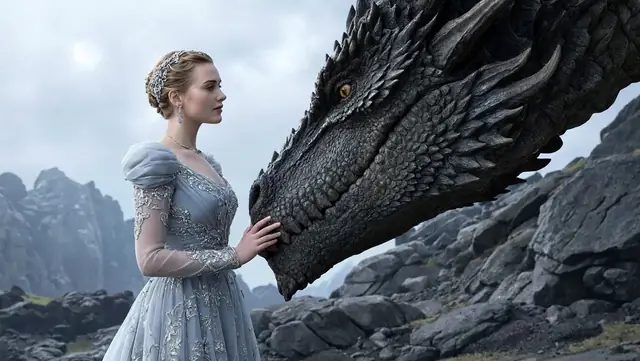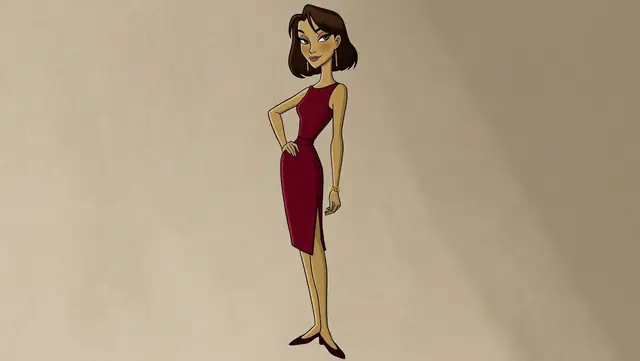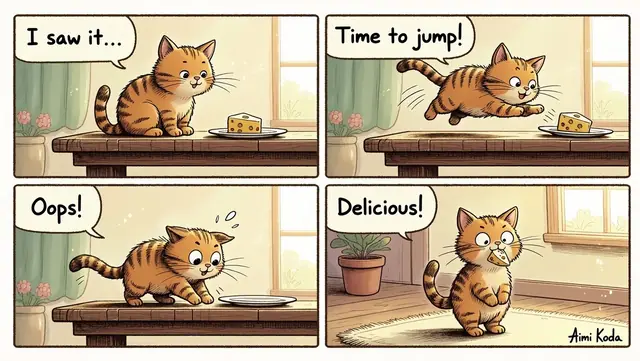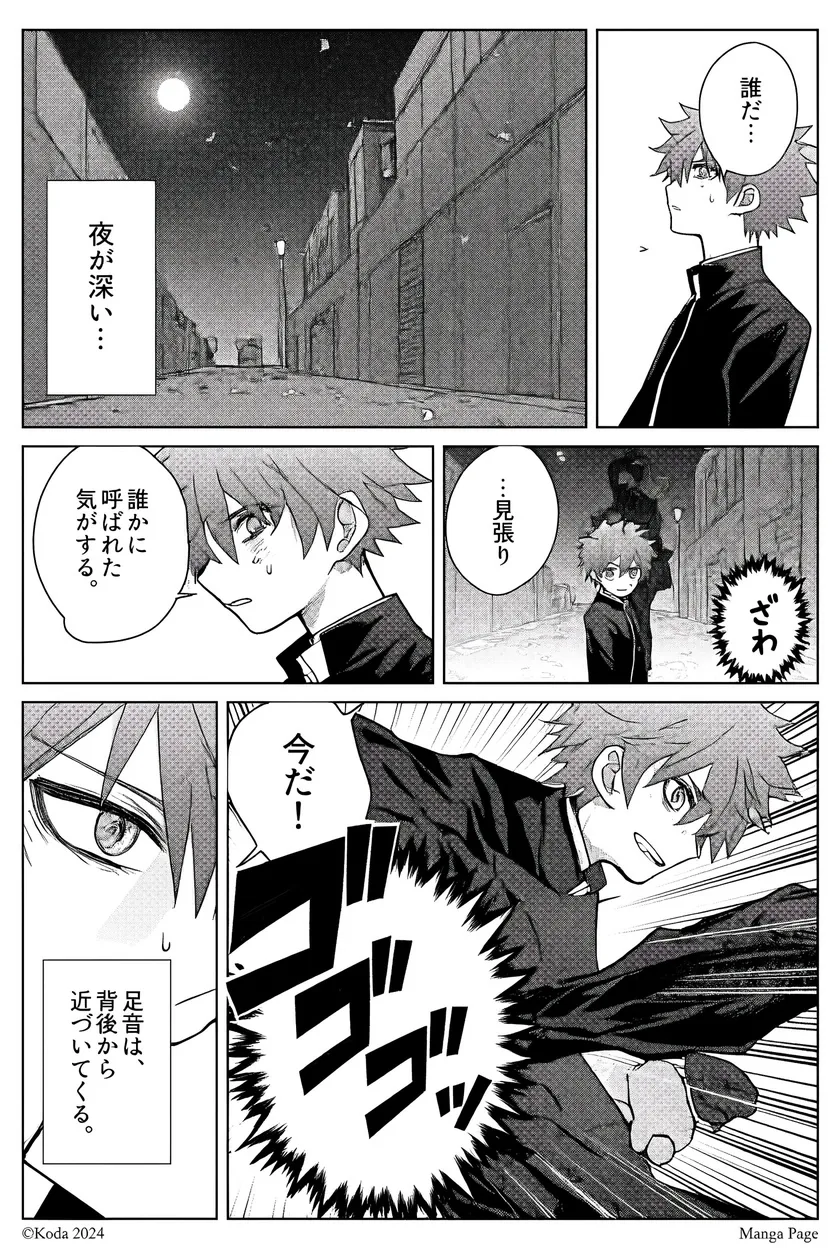
Image generated by h3image.online with MiniMax-H3-Image from this prompt. prompt by @aimikoda. We never treat the author's original image as ours, or our generation as theirs.
Prompt
Create a clean, coherent Japanese manga page based on the following parameters.

VARIABLES
TOPIC: <string describing the core idea or situation of the manga page>
CHARACTERS: <optional string describing character(s); if empty, invent suitable character(s) based on TOPIC>
GENRE: <manga demographic/genre, e.g. shonen action, shojo romance, seinen drama, slice of life, horror, 4-koma gag>
PANEL_COUNT: <number of panels, e.g. 4, 5, 6, 7>
PAGE_LAYOUT: <layout approach, e.g. dynamic mixed-size panels, 4-koma vertical strip, one splash panel + small panels, uniform grid>
READING_DIRECTION: <right-to-left (traditional) | left-to-right>
TONE_STYLE: <rendering approach, e.g. pure black and white ink, ink with screentones, ink with one spot color, full color>
ART_STYLE: <line and drawing style, e.g. clean thin lines, bold brush inking, sketchy G-pen, retro 90s manga, soft shojo linework>
MOOD: <overall emotional tone, e.g. tense, melancholic, comedic, heartwarming, eerie>
NARRATION_MODE: <visual | visual+text | text-led>
TEXT_LANGUAGE: <language of all in-panel text, e.g. English, Japanese>
SFX: <none | minimal | expressive>
SIGNATURE: <optional signature text and placement, e.g. "Koda, bottom-left"; if empty, do not add a signature>

INSTRUCTIONS
1. Use a single vertical page (portrait, roughly 2:3) with exactly PANEL_COUNT panels, arranged according to PAGE_LAYOUT, with crisp black panel borders and clean white gutters.
2. Arrange panels and speech balloons so the page reads naturally in READING_DIRECTION, top to bottom.
3. Interpret TOPIC as the narrative anchor and invent a short story that unfolds across the panels.
4. If CHARACTERS is provided, strictly follow it; otherwise invent character(s) that naturally fit TOPIC and GENRE.
5. Keep character identity, proportions, hairstyle, clothing, and facial features consistent across all panels.
6. Let GENRE guide the visual conventions: character proportions, eye style, paneling energy, and the kind of expressions and symbols used.
7. Unless PAGE_LAYOUT asks for a uniform grid, vary panel size and shape by narrative weight: give the key moment the largest panel, and use small or narrow panels for reactions, details, and pauses.
8. Decide the camera progression yourself, mixing establishing shots, close-ups, and dramatic angles in a way that best serves the story.
9. Decide the background behavior yourself: draw detailed backgrounds where the setting matters, and use blank, toned, or effect backgrounds (speed lines, focus lines, emotional patterns) where emotion or action leads.
10. Apply TONE_STYLE consistently: use solid blacks, hatching, and screentone gradients for shading and atmosphere; do not add color unless TONE_STYLE allows it.
11. Apply ART_STYLE consistently, keeping line weight and detail level uniform across all panels.
12. Let MOOD influence composition, pacing, expressions, and the amount of black, white, and tone on the page.
13. Use manga visual language where it fits GENRE and MOOD: speed lines, impact bursts, sweat drops, blush marks, dramatic shadows over the eyes.
14. Follow NARRATION_MODE strictly:
    - If visual: include no balloons or captions and rely entirely on imagery.
    - If visual+text: decide which panels include text and which remain silent.
    - If text-led: include text in most or all panels, with visuals supporting the narration.
15. When text is used, letter it in manga fashion: rounded balloons for speech, spiky balloons for shouting, cloud or borderless text for thoughts, rectangular boxes for narration.
16. Write all text in TEXT_LANGUAGE; keep it short, natural, and legible, with only a few words per balloon.
17. Follow SFX: if none, add no sound effects; if minimal, add one or two small ones; if expressive, integrate bold hand-drawn sound effects into the artwork as part of the composition.
18. Ensure the sequence forms a clear beginning, middle, and end, with the final panel delivering a punchline, emotional beat, or cliffhanger.
19. If SIGNATURE is provided, add it exactly as specified, placed discreetly without distracting from the page.
20. Avoid unnecessary elements, visual clutter, and garbled or pseudo-text.
21. Ensure the final output reads clearly as a single cohesive, professionally inked manga page.
Parameters we used
- Model
- MiniMax-H3-Image
- Aspect ratio
- 2:3
- Resolution
- 832x1248
- Area
- 1K
- Generated
- 2026-11-11 08:49:36 UTC
Source
Public post on X. prompt by @aimikoda · 2026-11-11.
0 likes on X when captured on 2026-11-11.
Parametric manga-page prompt template with variables (TOPIC, GENRE, PANEL_COUNT...).